Cathedral sound bath
60 min $95 · 90 min $135In the Cathedral of Sound
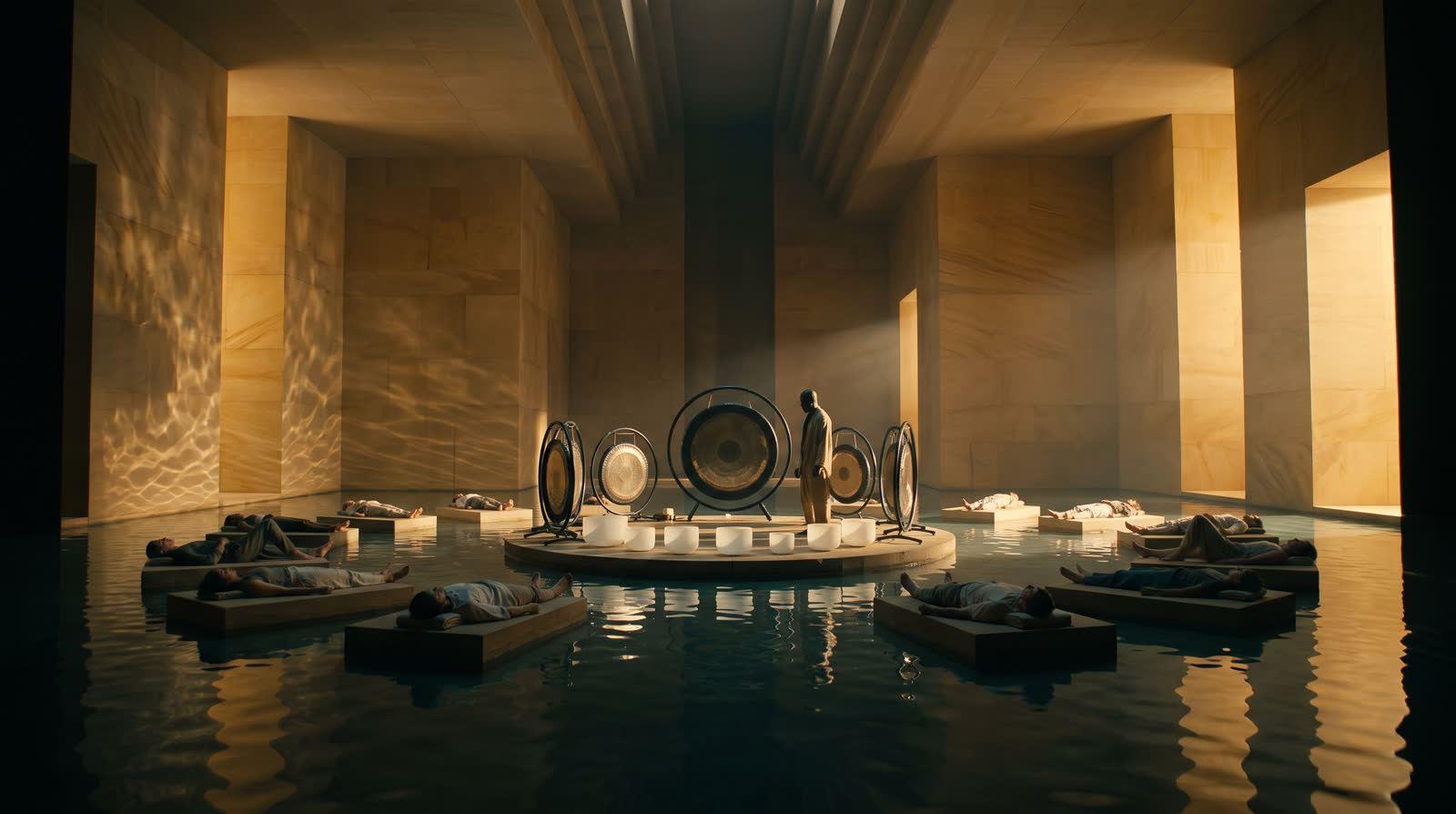
Lie on warm stone under a wool blanket while gongs, Tibetan bronze and quartz crystal bowls fill the sandstone hall. A small group, the lights low, nothing asked of you.
Four things, used together and used often: sound in the Cathedral, hands-on ancient practice, mineral water from the spring, and food made to be eaten before a soak and slept on after.
A sandstone hall over still water, built to hold a note. Gongs, Tibetan bronze and quartz crystal bowls, chant and breath. Each practice runs daily, and none is compulsory.
Lying still on warm stone while the great gong and a ring of bronze and quartz bowls are played around you. The aim is to arrive somewhere near sleep, and stay there a while.
A single sustained note, matched by the breath and then by attention. Taught from first principles, so it can be carried home.
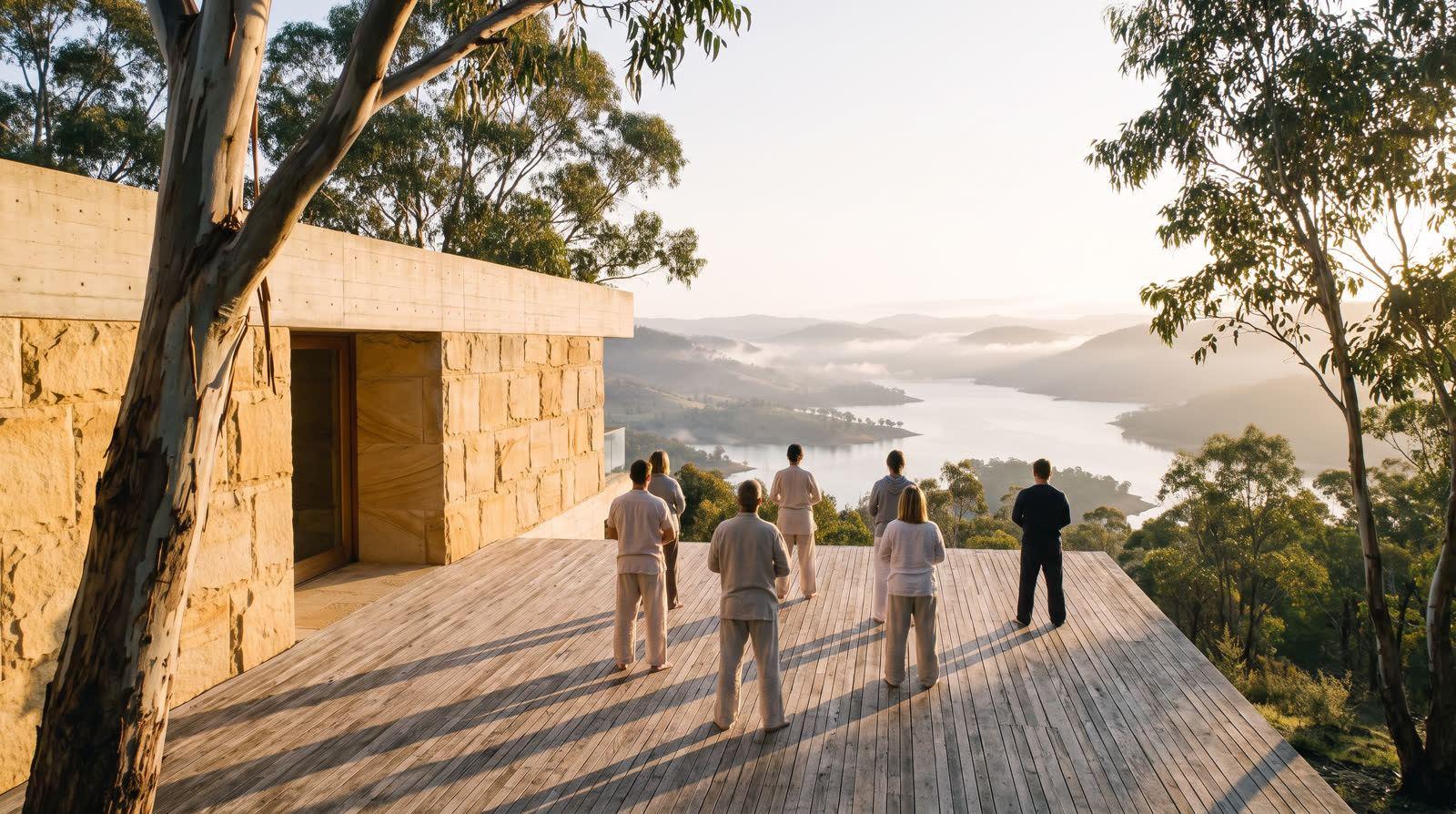
Slow standing movement on the cathedral deck, facing the valley and Lake Eildon, timed to the sun. Gentle enough for a first morning, deep enough for a tenth.
The same movement principles taken further, practised on the deck above the valley, or inside the cathedral when the weather turns.
Paced breathing taught before the first immersion, so the heat is met with a slow pulse rather than a quick one.
Guided rest on the edge of sleep, held in the cathedral as the light goes amber.
The syllable the place is named for, sustained by the room. No experience asked for, and no belief.
Every treatment works with vibration, touch or breath, and is taken alongside the water. Soak first, then the treatment, then back to the rockpool and sleep.
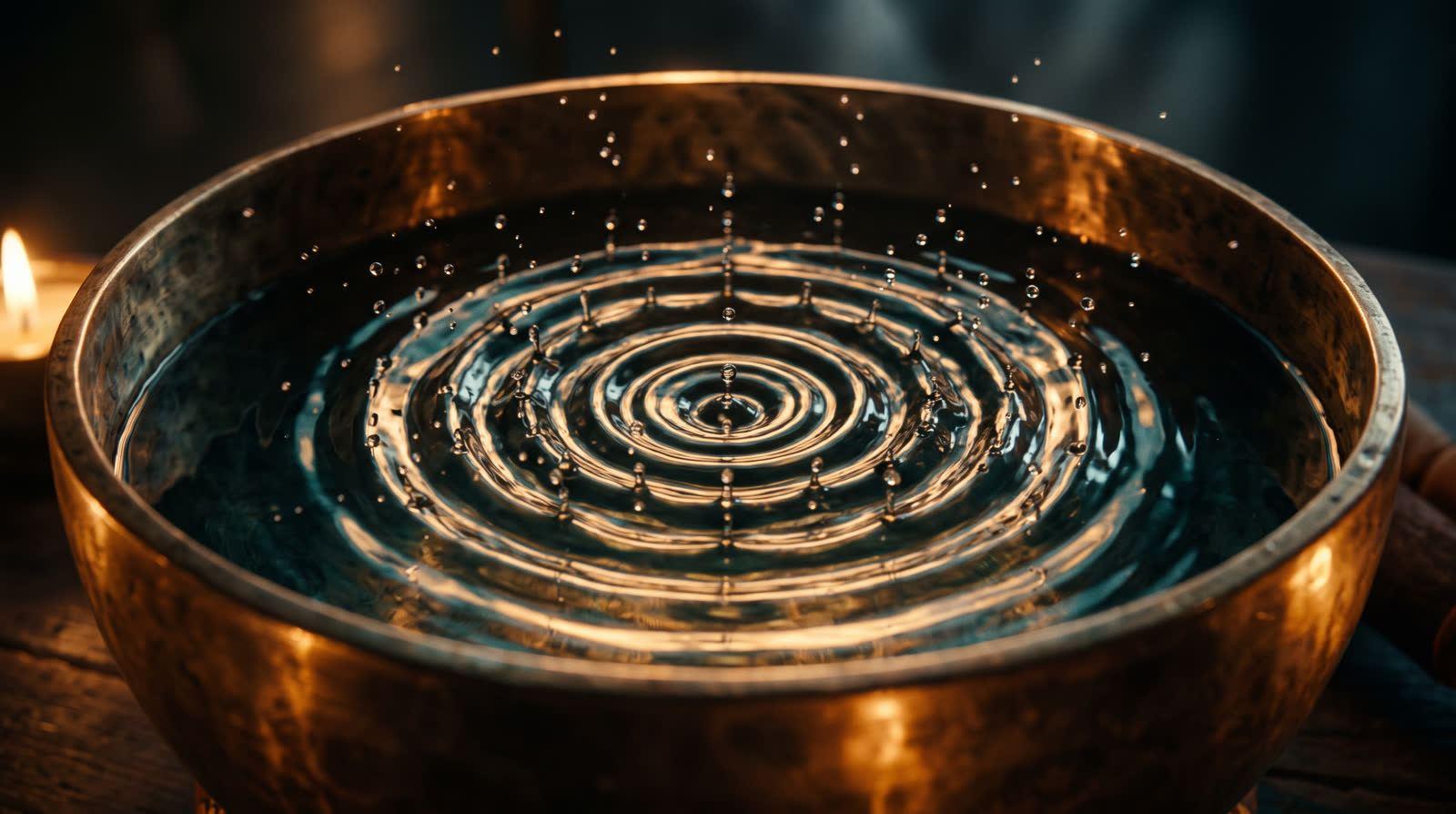
Vibration you hear and vibration you feel, from the oldest instruments there are.
In the Cathedral of Sound
Lie on warm stone under a wool blanket while gongs, Tibetan bronze and quartz crystal bowls fill the sandstone hall. A small group, the lights low, nothing asked of you.
Cathedral or villa
One practitioner, one guest. Singing bowls are set on and around the body so the vibration is felt as much as heard, then gong and voice carry you into deep rest.
In the villa
Weighted tuning forks placed along the body's points and lines, a quiet, precise practice drawn from acupressure. Taken clothed, on a warm table.
Hands-on traditions from Tibet, Japan and India, given in your villa after bathing.
In the villa
The traditional Tibetan bodywork: warm sesame oil worked deep into the muscle, kneading and pressure points, finished with a singing bowl on the back.
In the villa
Japanese finger pressure along the meridians, taken on a mat in loose clothing. Rhythmic, grounding and unhurried.
In the villa
The Ayurvedic oil massage, long flowing strokes with warmed herbal oil from scalp to feet, followed by a soak in the spring to carry it in.
Two practitioners
Side by side in your villa: a short bowl ceremony, then Ku Nye massage together, ending in the rockpool as the bowls fade.
Movement, breath and the spring itself.
Cathedral deck
One to one on the deck above the lake: Qi Gong forms, breathwork and a closing chant of Om. Movement that leaves you calmer than it found you.
In the villa
Warm mineral clay over the back and limbs, a hot compress, then a long soak in your rockpool while the clay is rinsed away by the spring.
Treatments support rest and relaxation and are not a substitute for medical care. Tell your practitioner about any condition, injury or pregnancy before you begin.
Rain that fell on the Victorian Alps rises through granite beneath the site, carrying magnesium, bicarbonate, silica and calcium. It fills a rockpool at every villa, passes through once, and is let go.
Twenty minutes at 38.6°C lifts the body a degree or two past its own. The long descent that follows is what carries a person into sleep, and of everything hot water is said to do, that is the one it does reliably.
Salt is the second mineral here in quantity, and it is the reason the heat outstays the bath. A fine trace of it settles on the skin and slows the sweat from leaving, so the body lets its warmth go far more reluctantly than it otherwise would. Japan has a name for a water that behaves this way: netsu no yu 熱の湯, the hot water. Guests tend to describe the effect the following day rather than the same evening.
Bicarbonate loosens what the week has left on the skin, the way a very good soap does and without any of the tightness after. Japan calls a water carrying it bihada no yu 美肌の湯, beautiful skin water. The effect is not subtle. Most people notice it on the back of the hand within an hour of getting out.
Magnesium is the mineral by which a bathing water is judged. This one carries 150 mg/L of it, more than any other in the country publishes, and it is the dominant mineral here by a good margin. An independent laboratory has classified it a healing water in those words. How much of it crosses the skin remains unsettled, and we decline to pretend otherwise. Beyond dispute is the feel of the water, and the difficulty of leaving it.
The bathing ritual, step by step
Independently tested and certified. The full analysis is available on request.
A Japanese kitchen cooking on butter, ghee and tallow, with produce from the organic farm next door. Warm, salted, easy to digest, and carried hot to your door.
Fifteen dishes arranged around your bathing. Broth and warm sugars before each immersion, shellfish on the second day, and stewed fruit with cream at night.
Twenty dishes, beginning with a consultation on arrival. Temperature and pulse are taken each morning and the salt, sugar and dairy adjusted to what they tell us. Liver once, oysters twice.